
Suwaphan Khunsiri

Work, systems, what I am learning, and life along the way

Hello, I’m Ake Suwaphan

Introduction

I work with systems, and I like taking complex situations apart carefully—until I can see where the real problem is, who it affects, and what will help the work move forward.

I began as a programmer. Over time, the work grew with me: from analysis and system design to leading teams and taking responsibility for systems in real-world use.

What I’m building: dootang and Pranee Audit ↓
Where I am now

Now Updated

After years of helping move organisational systems forward, I am bringing that experience into work of my own. I am also organising what I have learned so I can explain it more clearly, share it, and make it useful to others.

This is not a rejection of what came before. It is a way of reconnecting my experience in software, systems, teams, and production on my own terms.

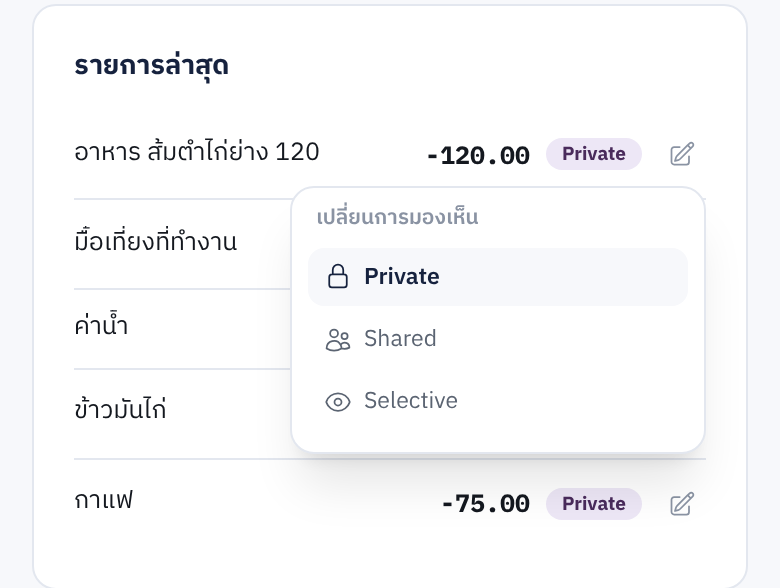
A sample dootang transaction list with Private, Shared, and Selective visibility options
Each transaction can be Private, Shared, or Selective
Design prototype using sample data. Interface shown in Thai.

Shared money still needs room for privacy

In progress · dootang

dootang began with a question: how can people who share a life and manage money together see what they need to see, while each person still keeps a private space and clear boundaries?

I use it to practise choosing what is worth building, keeping scope under control, and checking the work against real evidence.

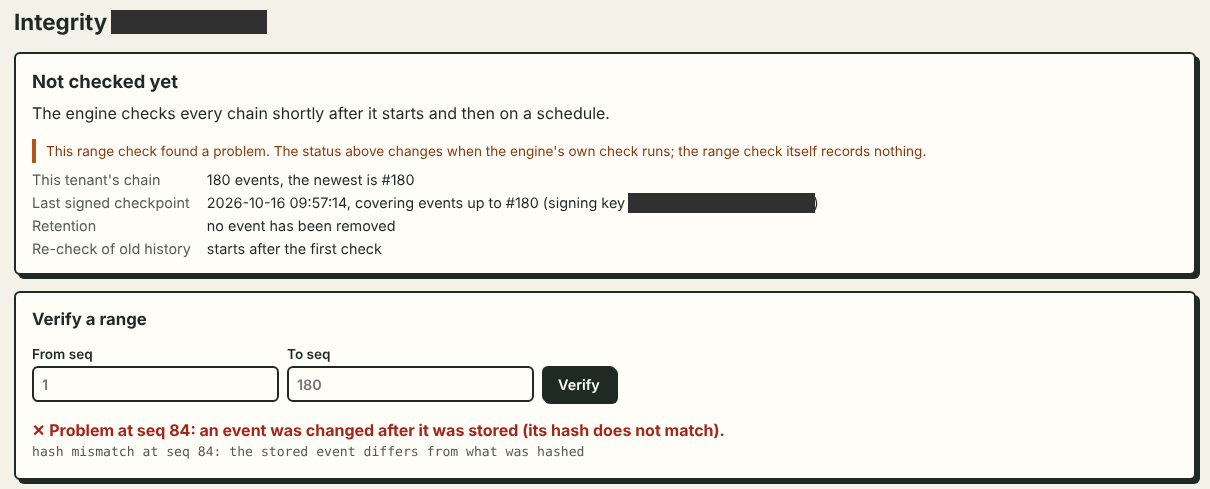
A Pranee Audit verification result reports a hash mismatch at event #84 in a simulated test, with tenant and signing-key identifiers covered in parts of the image
Verification result: the hash for event #84 does not match
Simulated data tampering tested in a running system using sample data.Some identifiers are covered in this image and the full desktop image. Other details remain visible. These image edits do not establish that the system masks data before storage.

Read the result and the state separately

The simulated test found a hash mismatch at event #84 and also includes a separate broken-chain state. The selected-range verification result and the chain state are different parts of the account; they should not be read as a continuous change of status.

Simulated data tampering tested in a running system using sample data.

How much can we trust a system’s record of change?

In progress · Pranee Audit

Pranee Audit explores a simple but difficult question. When a system says something changed, who changed it, or what state it used to be in, how much can we trust that evidence?

The work keeps bringing me back to continuity, boundaries, and responsibility in systems that have to operate in the real world.

Working with AI without handing over responsibility

Note · Working with AI

I am experimenting with ways to work alongside AI while keeping the boundaries, review, and human responsibility explicit.

I am interested in more than speed. The harder question is how we know the result is correct, appropriate, and supported by enough evidence for someone to remain accountable for it.